


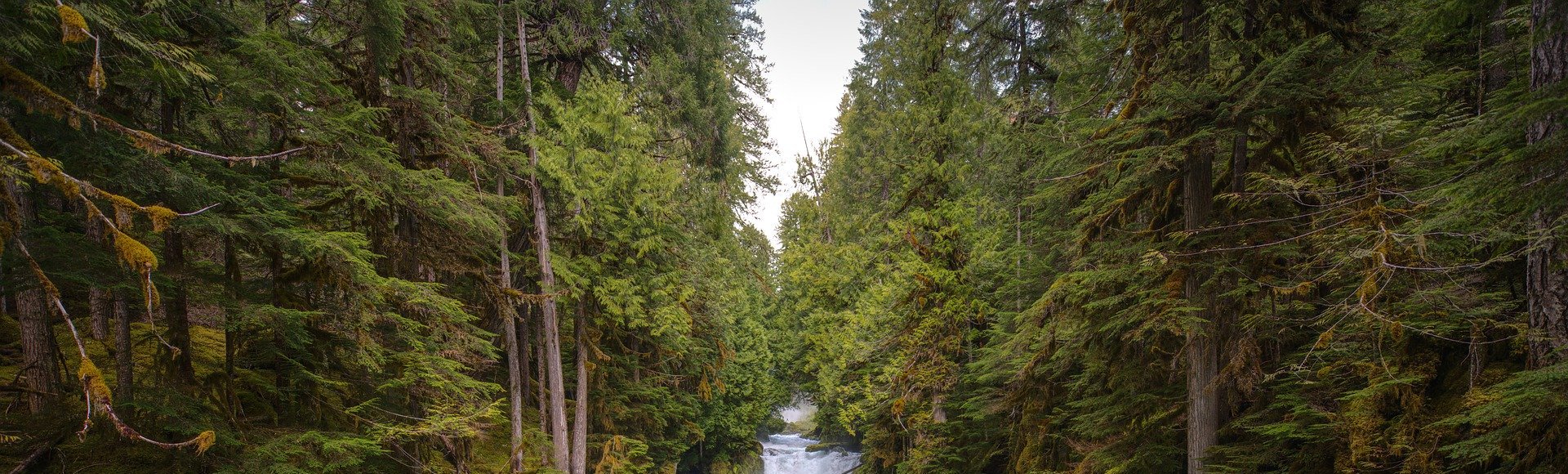
Rainforest Perućica
Perućica is the most famous of three protected rainforest reserves in Republika Srpska, Bosnia and Herzegovina. Perućica rainforest is part of the Sutjeska National Park
Certainly the most valuable pearl of the natural treasures of the Sutjeska National Park is the strictly protected Perućica reserve, one of the few preserved primeval forests in Europe. Back in 1938, foresters, while preparing a zoning study on Mount Maglić, found in the basin of the Perićica river, in the bay between Maglić, Volujak and Sniježnica, beautiful stands of beech, fir and spruce whose wood mass exceeded 1,000 m³ per hectare, and the height of individual trees reached over 50 m. Forest stands…
The view from the Vidikovac (Dragoš Sedlo) of Perućica and the Skakavac waterfall, which plunges from a height of over 70 m in the heart of the rainforest, fills one with satisfaction that this small part of primeval nature, with its rich multifunctional biodiversity, has been preserved for present and future generations. Preservation and protection of Perućica in its original state is one of the main tasks of the Sutjeska National Park. In the reserve, everything is left to nature. Birth, life, death and rebirth, that eternal life cycle…
The living world of Perućica expressed through vegetation (phytocenoses and plant communities, ecosystems, flora, fauna, etc.) is very diverse and rich. Due to its southern location in Europe (sub-Mediterranean-Mediterranean area), Perućica was a very important refugial area during the Ice Age, which enabled many thermophilic species of the European north and its center to be preserved in this area. The Ice Age affected the Perućica area, so its peak parts were covered with glaciers…
Within this strict nature reserve, in addition to forest stands of beech, fir and spruce, stands of subalpine beech, pure or with mountain maple, subalpine spruce, and vegetation of the mountain pine, or the so-called juniper pine, and mountain grassland vegetation are protected. In Perućica, as in other parts of the park, there is a real wealth and diversity of plant life, and a number of endemic and rare species. The richness of the plant life of Perućica can also be attested to by the fact that it has been registered…
Source: Wikipedia



National Park Sutjeska
Nacionalni park Sutjeska je najstariji nacionalni park u BiH. Sutjeska je postala nacionalni park 1965. godine i prostire se na površini od 17 500 hektara. Najbliži grad je Foča. Nalazi se na magistralnom putnom pravcu Beograd – Višegrad – Foča – Tjentište – Bileća – Trebinje – Dubrovnik.
Ovdje se nalazi i jedna od dvije poslednje prašume u Evropi – Perućica.
U Sutjesci se takođe nalazi i najviši planinski vrh u Bosni i Hercegovini Maglić 2386 -{m}-.
Planina Maglić se nalazi na granici Bosne i Hercegovine i Crne Gore i može joj se prići iz nacionalnog parka, što predstavlja veliki izazov za planinare, alpiniste i njima slične ljubitelje prirode. Rijeka Sutjeska je dugi niz godina usijecala svoj put kroz kanjon i pritiče kroz samo srce ovog nacionalnog. Njene planine, jezera, rijeke, šume i sačuvana divljina su među najveličanstvenijim u Evropi. Ovi Dinaridi protežu se duboko u Balkansko poluostrvo, sve do Prokletija na granici sa Crnom Gorom i Albanijom.
U Nacionalnom parku «Sutjeska», na relativno malom prostoru, skoncentrisano je ogromno blago biljnog i životinjskog svijeta. Zbog toga je ovo područje bilo i još uvijek je veoma privlačno za mnogobrojne naučnike, botaničare, geologe, zoologe te šumarske stručnjake. Bogati biljni svijet sadrži preko stotinu vrsta jestivih gljiva, kao i veliki broj rijetkih, osjetljivih i ugroženih vrsta.
Životinjski svijet je takođe izuzetno bogat. U gustim šumama i po planinskim vrletima, žive gotovo sve vrste tipične za balkanski planinski prostor. Zabilježeno je 114 vrsta ptica (2002. godine), mada se smatra da ih ima više. Od zabilježenih 114 vrsta, 61 se gnijezdi u Nacionalnom parku Sutjeska, 32 vrste posjećuju park svakog ljeta, dok 16 vrsta pripada selicama koje prolaze ovuda u jesen i proljeće. Pet vrsta se samo zimi pojavljuje u nacionalnom parku. Spisak ptica uključuje i 9 vrsta djetlića, što predstavlja 90 % ove porodice u Evropi.
Source: Wikipedia